


AI digital marketing is useful when it helps a business make better decisions before money leaves the account.
That sounds obvious, but most businesses meet AI at the wrong point in the process. They use it to make more ad variations, more captions, more image prompts, and more generic “marketing ideas.” Then they put spend behind the most polished version and hope the market agrees.
That is not a campaign strategy. It is a faster way to guess.
A better use of AI is to build the campaign launch plan first: understand the market, study the messages already competing for attention, identify a credible opening, decide what the offer needs to say, map the ad to the landing page, and give the person launching the campaign a practical checklist.
That is the job of an AI digital marketing system such as AdArchitect. It is designed to turn research and campaign decisions into an organized Meta campaign kit—not to promise that pushing a button will magically create customers.

Why Meta Ads Fail Before the Ad Runs
Many Meta campaigns are blamed on the creative when the real problem happened earlier.
The business may have started with:
- an offer that is too vague to compare against alternatives;
- no evidence of what local or category competitors are already saying;
- an ad angle selected because it “sounds good,” not because it creates a useful contrast;
- a landing page that answers a different question than the ad raised;
- a budget with no realistic testing plan; or
- no documented process for what happens after someone clicks or submits.
AI can generate an ad in seconds. It cannot automatically decide whether the offer is clear, whether the claim is credible, whether the page continues the conversation, or whether the business can follow up with the leads it creates.
That is why the best AI marketing workflow starts upstream. Before asking for more assets, it asks better planning questions.
What AI Digital Marketing Should Do Before Launch
A useful AI-assisted campaign plan should organize the parts of a launch that are usually scattered across browser tabs, notes, screenshots, ads managers, and someone’s memory.
1. Research the market instead of copying the first competitor you find
Competitor research is not about cloning an ad. It is about seeing the category clearly enough to avoid entering it with the same message everyone else already uses.
A campaign launch kit can document:
- which competitors are visible in the category;
- what they lead with in their ads and websites;
- their calls to action, offers, service framing, and trust signals;
- the messages that repeat across the market; and
- the gaps worth testing without inventing a fake differentiator.
For example, a competitor may lead with generic “quality service,” a long feature list, or a vague claim about saving time. That does not automatically mean the opposite message will win. It means you now have a starting point for a sharper question: what can this business say specifically, credibly, and clearly that a buyer can understand in one pass?
The goal is not “be different” for its own sake. The goal is to make the campaign easier for the right customer to understand.
2. Find message fatigue before adding to it
A good campaign plan should look for overused angles before it recommends a new one.
If every competitor is running broad awareness messaging, another broad awareness ad may have to work harder just to be noticed. If every ad uses the same fear, discount, or “we are the best” language, the category can become visually and verbally interchangeable.
Ad fatigue scoring is one way to organize that research. It does not predict results with certainty. It helps the marketer see where the category is crowded and where there may be room to test a clearer, more specific angle.
The sample AdArchitect Campaign Launch Kit includes this kind of analysis alongside competitor snapshots and market signals. The important outcome is not a colorful score. It is a usable launch decision: which messages should we avoid repeating, which trust signals deserve more prominence, and which opening angle should we test first?
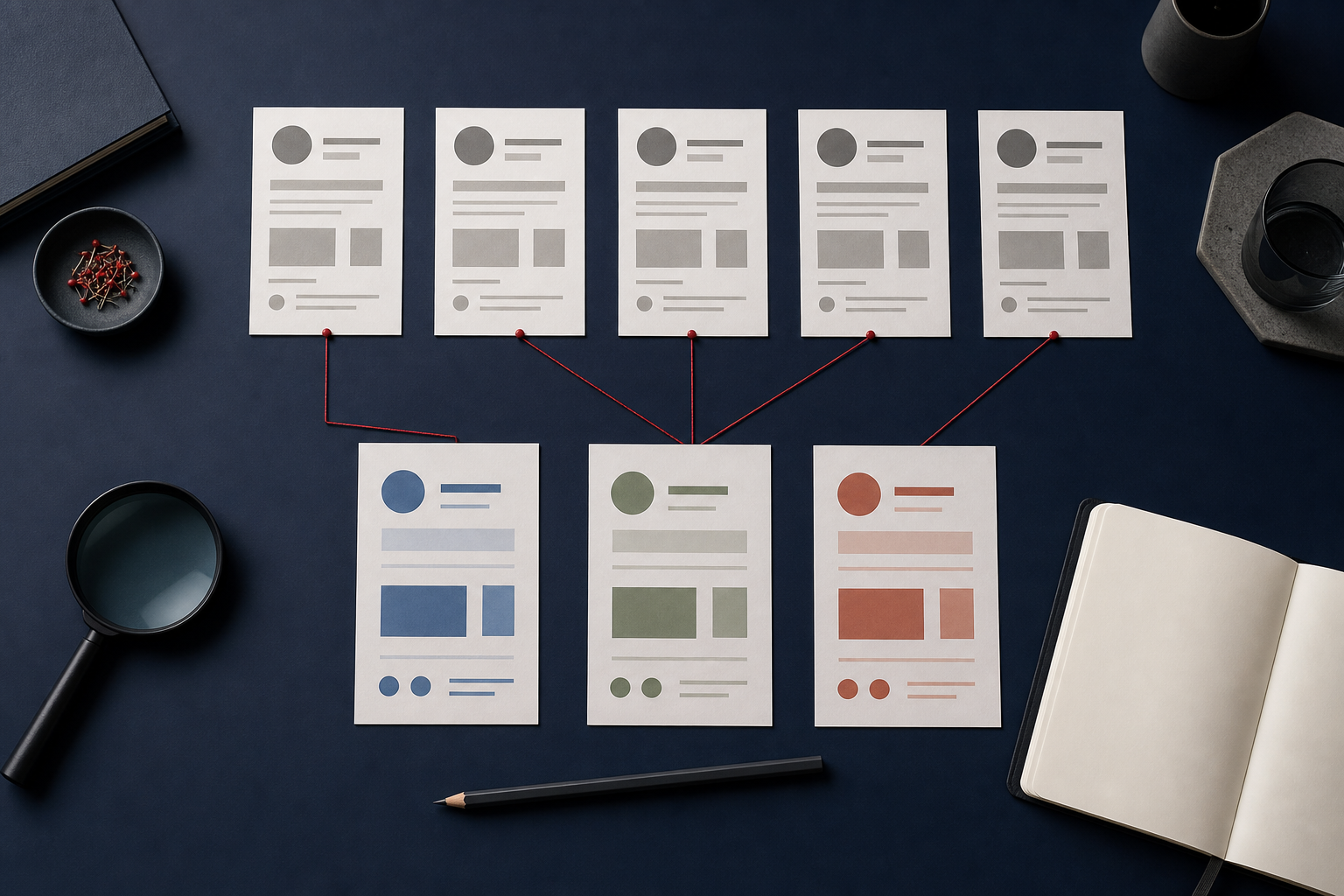
3. Turn research into actual campaign concepts
Research is only useful when it becomes a campaign decision.
A campaign concept should define more than a headline. It should explain:
- the customer problem or decision tension;
- the offer or promise being made;
- the reason to believe it;
- the angle or emotional pressure behind the creative;
- the visual direction; and
- the call to action.
That makes it easier to create ads that belong together without becoming identical. One concept might lead with a pricing or speed-to-launch contrast. Another could use proof or trust. A third may directly address the cost of guessing. The point is to build a small, intentional testing set—not a pile of random AI outputs.
For a local service business, this could mean distinct campaigns built around emergency availability, a named service offer, a seasonal problem, a financing path, or a visible proof signal. For a business selling expertise, it may mean a clearer contrast between a one-time plan and an open-ended agency retainer.
AI can help develop those options quickly. The human job is to reject the ones that are generic, unsupported, or disconnected from how the business actually sells.
The Ad-to-Page Match Is Where the Campaign Becomes Real
An ad does not succeed alone. It sends a person somewhere.
If the ad promises a specific outcome and the landing page opens with a generic company introduction, the campaign loses momentum. If the ad uses urgency but the page has no obvious action, the click may never become an inquiry. If the form asks for too much too soon, the message match is broken by friction.
That is why an AI digital marketing plan should include a landing-page audit, not only ad copy.
A practical audit checks whether the page:
- repeats or supports the promise made in the ad;
- explains the offer quickly enough for a first-time visitor;
- shows a clear next step;
- provides appropriate proof without making unsupported claims;
- works on mobile; and
- makes the lead handoff obvious to the business.
AdArchitect includes a landing-page audit with an alignment score as part of the campaign kit. The score itself is not the finish line. The value is the list of specific alignment issues to fix before or alongside the launch.
Budget Recommendations Need Context, Not False Precision
AI can summarize budget scenarios and help organize a testing plan. It should not pretend to know an exact cost per lead before the campaign has real data.
A smart launch plan uses budget recommendations to answer practical questions:
- How much testing room is available?
- How many concepts can we reasonably evaluate at once?
- What audience or location choices are worth testing first?
- What would make us pause, adjust, or shift budget?
- What metrics matter before declaring an ad a winner or loser?
The answer is not always “spend more.” Sometimes the right next move is to improve the offer, repair the page, simplify the form, or make sure follow-up is ready before scaling traffic.
That is one of the biggest advantages of using AI for campaign planning instead of only content generation: it can force the launch into a written decision process.
What a Complete AI Marketing Campaign Kit Can Include
A useful deliverable should give the business something it can open, review, and act on—not a vague promise that “AI optimized your marketing.”
The AdArchitect Campaign Launch Kit is built around that standard. Depending on the business and market, it can include:
- competitor and market research;
- competitor ad and positioning snapshots;
- market signals and message-fatigue analysis;
- campaign concepts and creative direction;
- Meta ad copy and image direction;
- budget recommendations;
- a landing-page audit with alignment guidance; and
- a day-by-day launch checklist.
The product is a plan and a set of launch assets. It is not an auto-publishing system and it is not a substitute for a business responding to leads, maintaining its site, or delivering on its offer.
That distinction matters. The goal is to give a business a clearer path from “we should run ads” to “we know what we are testing, why we are testing it, where the clicks go, and what happens next.”
A Pre-Launch Checklist for AI Meta Ads
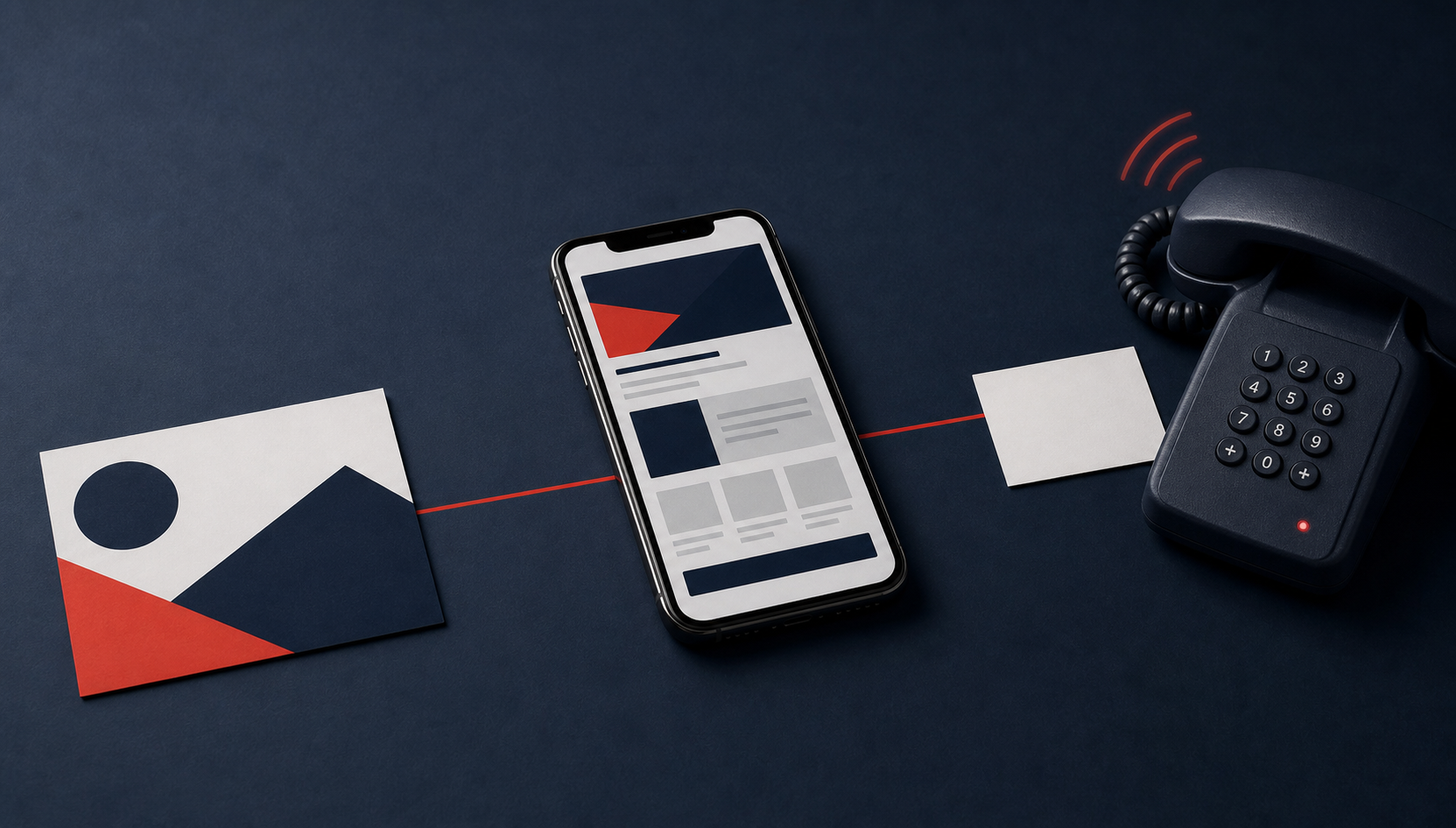
Before spending on a new campaign, use this checklist.
Offer
- Can a first-time visitor explain what is being offered in one sentence?
- Is the offer specific enough to compare with alternatives?
- Can the business support every claim made in the ad?
Market
- Have you reviewed the messages competitors are using right now?
- Are you repeating a category cliché without a reason?
- Is there a credible angle that makes the offer easier to understand?
Creative
- Does each ad concept have a distinct reason for existing?
- Is the hook tied to a real buyer problem or decision?
- Does the creative show or explain the offer instead of merely decorating it?
Landing page
- Does the page continue the promise made by the ad?
- Is the primary call to action visible without hunting for it?
- Is the page usable on a phone?
- Does the form ask only for information needed at this stage?
Follow-up
- Who receives a new lead?
- How quickly can that person respond?
- Is there a clear script, booking path, or next step?
- How will the business know whether a lead became a real opportunity?
Measurement
- What is the first metric you will watch?
- What tells you the offer or page needs work, not just the ad?
- What will you change after the first testing window?
This checklist is not glamorous. It is also where many campaigns are won or lost.
The Right Question Is Not “Can AI Make My Ads?”
AI can make ads. It can make hundreds of them.
The better question is: Can AI help us make a more informed launch decision before we spend?
When AI digital marketing is used that way, it can reduce the time between research and action. It can help a business see its market, organize a campaign, avoid obvious mismatches, and start with a real plan instead of a blank ad account.
That is what AdArchitect is for.
If you want help turning the plan into a live revenue path, talk to Pork Pixel about implementation.
Frequently Asked Questions
What is AI digital marketing?
AI digital marketing is the use of artificial intelligence to support marketing work such as research, campaign planning, audience and message analysis, creative development, reporting, and workflow organization. It is most useful when paired with human review, real business data, and a clear offer.
Can AI create a Meta ad campaign?
AI can help create campaign components, including research summaries, copy options, creative direction, landing-page recommendations, and launch checklists. A responsible campaign still needs human review, truthful claims, account setup, budget decisions, and lead follow-up.
Is AI marketing better than hiring an agency?
They solve different problems. A campaign kit can give a business a clear plan and assets without committing to an ongoing retainer. An agency or implementation partner may be valuable when the business needs hands-on execution, optimization, site work, tracking, or ongoing management.
What should I do before launching Meta ads?
Clarify the offer, review the market, develop distinct concepts, check message-to-page alignment, prepare follow-up, and define how you will evaluate the first test. A documented campaign plan helps keep those decisions connected.
How much does AdArchitect cost?
AdArchitect is currently offered as a $379 one-time Campaign Launch Kit with no subscription. Visit AdArchitect for the current offer details.